
You're looking at your basement floor after last night's rain, and there's water coming up from underneath the concrete. Not from a pipe. Not from a window well. From the ground itself. This is hydrostatic pressure, and it's the single most common reason basements in the GTA flood, especially in August when we get heavy downpours and the water table rises.
Here's what's actually happening and what you need to do in the next few hours to stop it from turning into a $10,000 repair bill.
What is hydrostatic pressure?
Your basement is dug into the ground. Around your foundation, there's soil, and under that soil there's water. The water table. When it rains heavily, that water table rises. If it rises higher than your basement floor, the water pressure pushes straight up through the concrete and into your basement.
Concrete is porous. It looks solid, but it's full of tiny capillaries. Water doesn't just pool on the surface. It comes up through the material itself. That's why you see a damp ring or wet patches rather than a single leak. That's hydrostatic pressure.
In Toronto and the GTA, we see this constantly. The region's soil composition (clay and silt, mostly) doesn't drain as well as sandy soil would. When a thunderstorm drops 40mm of rain in two hours (which happens almost every summer), the water table rises fast. Your sump pump might not be able to keep up, or you might not have one at all.
Why August is the peak month for this
August is when hydrostatic pressure causes the most basement water damage across the GTA. Not May, not spring melt (though that's a runner-up). August. Here's why.
By August, the groundwater table is already elevated from spring melt and early summer storms. The soil is saturated. When you get the afternoon thunderstorm that August typically brings, there's nowhere for that water to go but sideways and down into the water table. Your foundation doesn't have a choice. The pressure pushes water up.
We've handled water damage in homes in Vaughan, Markham, Mississauga, and across North York and Scarborough, and August is consistently our busiest month for ground water intrusion. If you have a dry basement right now, that's luck. That will change with the next heavy rain.
How to tell the difference between hydrostatic pressure and other basement water problems
Hydrostatic pressure looks different from other water issues:
- Hydrostatic pressure: Water appears as a damp ring along the perimeter, or scattered wet patches across the floor itself. You might hear a faint hissing sound as water is pushed through the concrete. The floor stays damp even hours after visible water is gone.
- Rain intrusion from walls: Water runs down the walls first, then pools on the floor. You can usually trace it to a specific wall or window well.
- Plumbing or appliance leak: One point source. You can see where it's coming from.
- Sump pump failure: Water that was being pumped out is now pooling in your pit. You'll see it rise in that specific area.
If you see damp patches on the floor and the surrounding soil outside is wet after rain, and you notice this happens every time it rains heavily, you're dealing with hydrostatic pressure. Not the other kind of water damage. And that changes what you do about it.
What to do in the first hour
If your basement floor is wet right now:
First, stop the source if you can. Check your gutters and downspouts. Are they directing water away from the foundation? They should be dumping water at least 6 feet out. If they're clogged or the downspout discharge is broken, fix it. This won't stop today's water, but it stops tomorrow's.
Next, extract standing water with a wet/dry shop vac. A regular household vacuum will burn out. You need a shop vac. If you don't have one, this is the time to rent or borrow one. You want that floor as dry as possible right now. Every hour water sits on concrete increases the chance of mould and concrete damage.
Once the visible water is gone, open every basement window and door. Set up fans to move air across the floor. If you have a dehumidifier, run it. These won't solve the problem (more on that in a moment), but they start the drying process.
Here's why your dehumidifier won't fix this
This is the part where homeowners often make an expensive mistake. They remove the standing water, set up fans and a dehumidifier, and think they're done. The floor looks dry in a few days. Problem solved, right?
No. Not even close.
Residential dehumidifiers move air and reduce humidity in the room. They do not dry out concrete. They do not reach into wall cavities or under subflooring. Concrete can take months to dry completely when it's been saturated. If there's carpet or hardwood or any flooring material on top of that concrete, the moisture underneath is trapped. That's where mould grows.
We've gotten calls from homeowners in Etobicoke, Richmond Hill, and Oakville weeks after they thought they'd dried their basement. They're calling because the smell is back, or a mould testing company flagged a problem. They used fans. They used a dehumidifier. They thought they'd handled it. But the concrete was still wet three inches down, and mould was already growing inside their walls.
When to call for professional water damage restoration
If your basement floor is wet or noticeably damp more than 6 hours after you've removed visible water with a shop vac, or if water returns during the next rain, you need professional assessment. This is the time to call a certified flood restoration company with structural drying equipment.
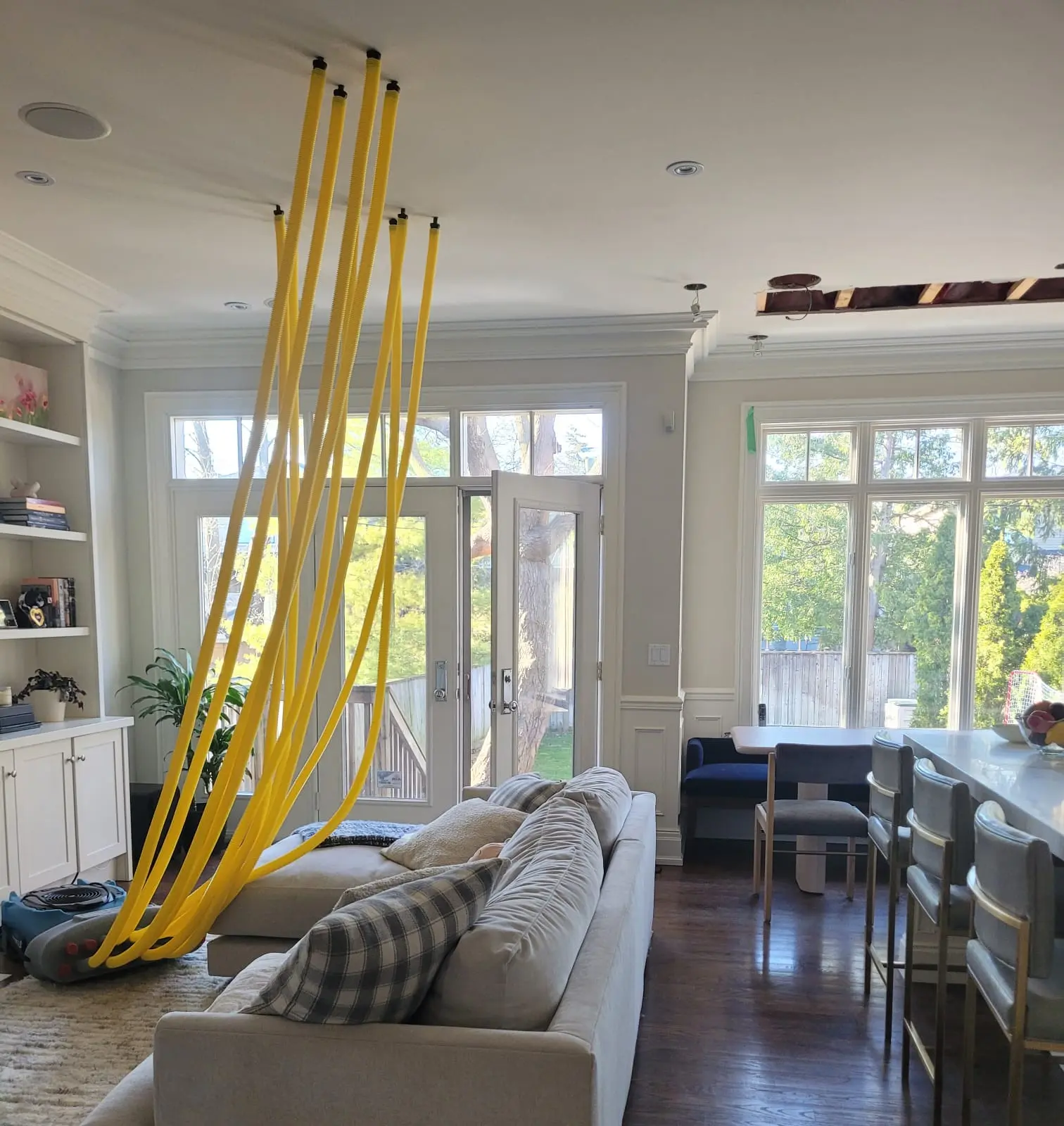
Industrial drying equipment is dramatically different from household fans and dehumidifiers. A restoration crew will assess the moisture level inside the concrete and walls with a moisture meter. They'll set up commercial-grade dehumidifiers and air movers. They'll monitor the space for days until it reaches normal moisture levels. That's what it actually takes to dry a concrete basement after hydrostatic pressure intrusion.
Long-term solutions
If this is a recurring problem (water after every heavy rain), you need a permanent solution. Interior or exterior waterproofing, a sump pump if you don't have one, or a backwater valve if sewage is also a concern. These are investments, but they're far cheaper than dealing with water damage twice a year.
Start with the simple stuff: make sure gutters are clean, downspout discharge is working, and the ground around your foundation slopes away from the house. That solves 30 to 40 percent of hydrostatic pressure problems right there. The rest usually require a sump pump or interior drain installation.
What this means for your flooring
If you have carpet or hardwood or any flooring material down there and water seeped underneath, that material needs to come up. Not eventually. Now. Water under carpet leads to mould within 48 hours. Water under hardwood causes rot and cupping. Laminate swells and becomes unusable.
Get a professional to check whether that flooring can be saved or needs replacement. Most of the time when water has seeped up from hydrostatic pressure, the flooring does not survive. It's not something you can dry out. It has to be replaced.
One more thing
Water coming up through your basement floor during a heavy rain is not a structural failure. It's not a catastrophe. It's a common problem in the GTA, and it's manageable. The difference between a $500 problem and a $10,000 problem is whether you move fast. Remove water immediately. Start drying immediately. If it doesn't stay dry, call for professional restoration immediately.
If your basement floor is wet right now or water keeps coming back after heavy rain, call us at 647-563-9966. We offer structural drying through our flood restoration service, and we can assess whether you need longer-term waterproofing work. We're available 24/7, and someone picks up every time.
The Preferred Group
IICRC Certified restoration team. Toronto-based, working across the GTA since 2006. 6,000+ projects under our belt.