
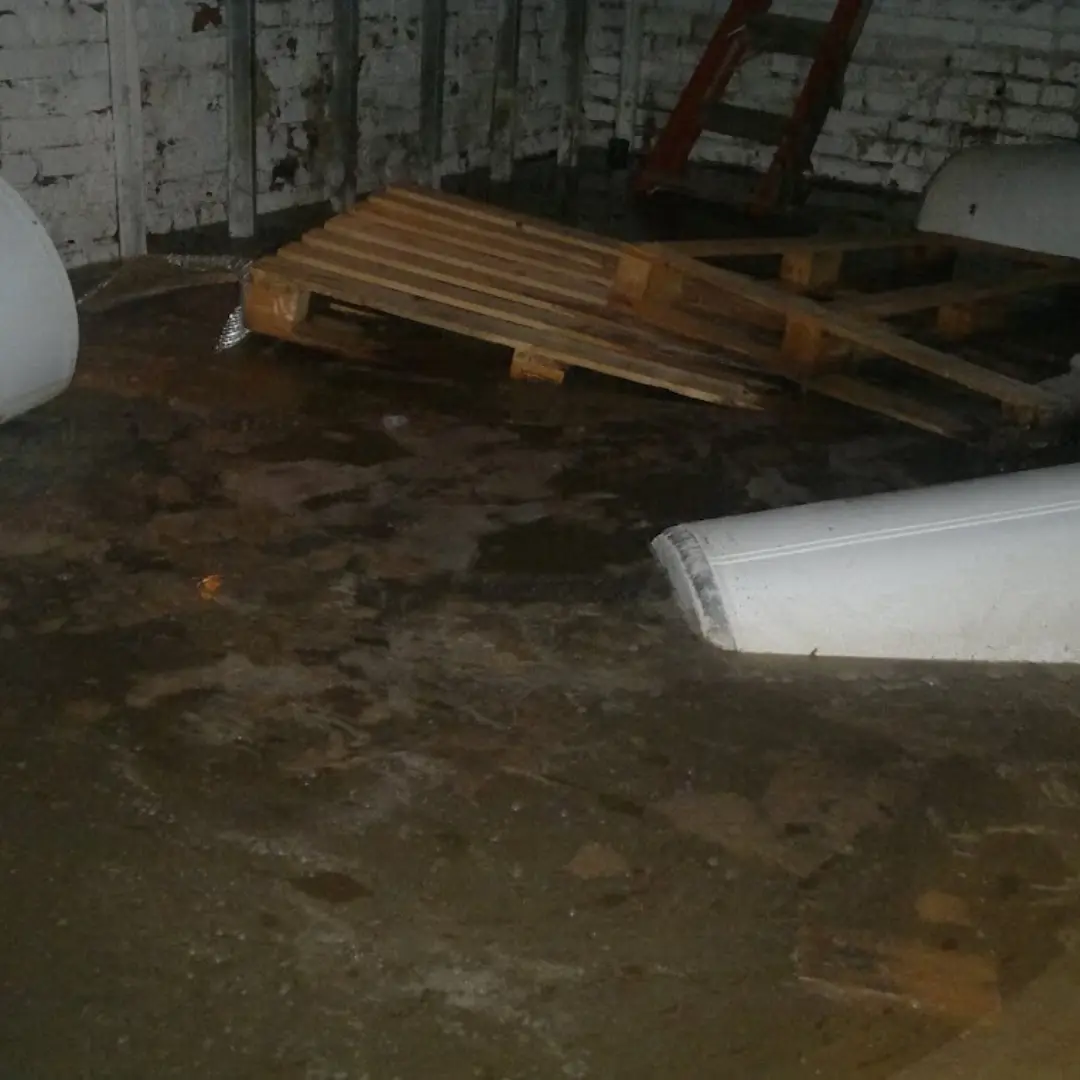
The sound that wakes you up is unmistakable once you've heard it. A steady rush, or maybe a drip that keeps going when it shouldn't. You're half asleep at 2 AM and the first instinct is to hope it's the dishwasher finishing a cycle. It's not.
Burst pipes are one of the most common water damage calls we take across the GTA, and they happen year-round: a corroded copper fitting in a 1960s North York bungalow, a flexible supply line under a bathroom sink in a Mississauga semi, a soldered joint in a Scarborough century home that's been weeping for months and finally gave out. When a pipe bursts, it moves water fast. What you do in the next ten minutes determines a lot about how expensive the next few weeks are going to be.
Shut off the main water supply before you go looking for the break
Don't go hunting for where the pipe burst first. Shut off the main supply and then figure out what happened.
In most Toronto-area homes, the main shutoff is in the basement or mechanical room, usually near the front of the house where the supply line comes through the foundation from the street. It's either a gate valve (the round wheel handle) or a ball valve (the lever handle). Ball valve: rotate 90 degrees until it's perpendicular to the pipe. Gate valve: turn clockwise until it stops.
Once the water is off, open the lowest cold tap in the house to drain pressure from the system and slow the flow from any break that's already open.
If you don't know where your main shutoff is, find it now, before the next emergency. It takes two minutes and costs nothing.
Kill the power to the affected area before you wade in
Water and electricity in the same space can kill you. If water is running down from above, or there's standing water on any floor, go to your electrical panel and shut off the breakers for the affected areas before you go back in.
If the panel is in the flooded zone and you'd have to step through standing water to reach it, don't. Call Toronto Hydro at 416-542-8000 or your local utility and explain the situation. They can cut power to the house if there's an active safety risk.
Document the burst pipe damage before you move anything
This feels absurd at 2 AM. Do it anyway. Pull out your phone and shoot 60 seconds of video panning across every affected area. Waterlines on walls, standing water on floors, any contents that got hit. Take it before you touch anything.
Adjusters work off documentation, and a video taken right after the water damage happened is worth more to your claim than any description you give two days later. We hear homeowners say they wish they'd done this almost every single job.
Why burst pipe water damage can't wait until morning
This is the conversation we have with people who call us at 6 AM hoping to schedule something for later in the day. The math doesn't work in your favour.
A burst supply line in a residential home can put out 50 to 150 litres of water per hour. That water moves into drywall, insulation, subfloor assemblies, and wood framing immediately. At the 24-hour mark, mould spores that exist naturally in every Toronto home start colonizing wet material inside wall cavities. At 48 hours, you're looking at mould remediation on top of water damage restoration. The bill roughly doubles.
Water also travels much farther than it looks. A supply line that bursts on the second floor of a Richmond Hill detached will have water in the ceiling below, in wall cavities, and wicking into the subfloor before you come downstairs. What looks contained on the surface almost never is.
Our 24/7 flood restoration team responds at any hour because the difference between a 2 AM call and a 9 AM call is usually measured in thousands of dollars of additional damage.
What to do while you wait for the crew
Once the water is off, power is cut to affected areas, and you've documented the damage:
- Move small valuables off the floor if you can do it safely: electronics, important documents, anything irreplaceable
- Open windows if the weather permits to start moving air through the space
- Put towels at door thresholds to slow water migration between rooms
- Do not use a regular household vacuum on standing water
- Do not run a residential dehumidifier in a room that still has standing water
If there's any chance the water touched a floor drain or toilet, treat it as contaminated until the crew has assessed it. Sewer water is a biohazard situation, not just a wet floor.
The hidden water damage you won't see for days
After a burst pipe, there's the visible damage (soaked floors, wet drywall, ruined contents) and then there's the structural damage inside the assemblies. This is the part that catches people off guard.
Hardwood floors sitting over a wet subfloor will cup and buckle within 48 hours. Drywall that looks dry on the surface can have saturated insulation batt behind it for days. Water that wicks into framing lumber stays wet long after the room feels fine to the touch.
Professional wet floor and structural drying equipment pulls moisture from inside assemblies in a way that a box fan simply cannot. We run air movers and commercial dehumidifiers together in a calibrated setup, and we use moisture meters and thermal cameras to track what's happening inside walls and floors throughout the process. Drying looks like it's done on the surface long before it actually is.
If you try to dry a burst pipe situation with fans and call it done when the floor feels okay underfoot, you will very likely have a mould problem two to three weeks later on top of everything else.
What to tell your insurance company in the morning
Standard Ontario home insurance policies cover sudden and accidental water damage from things like burst supply lines. Call your broker when their office opens and report the claim right away. Have the time the pipe burst, the location in the house, and the cause ready when you call.
Most insurers want to be notified before major restoration work begins, so if a crew is already on site when you call, that's fine. We do direct insurance billing with most major carriers across the GTA, which means you're not managing money back and forth while the claim processes.
One thing to avoid: don't start large-scale demolition (pulling drywall, ripping up flooring) before your insurer has had a chance to send someone to document the damage. Take your own video first thing, then let the process move in the right order.
The one thing that actually helps at 2 AM
In 20 years of doing this work in Toronto and across the GTA, the homeowners who come out of a burst pipe situation in the best shape are almost always the ones who made a phone call early and didn't try to wait it out. That's really the whole thing.
The water isn't going to fix itself overnight. The mould clock starts ticking the moment the pipe breaks. Getting IICRC certified restoration crews on site within a few hours of a burst pipe is not an overreaction. It's the cheapest decision you can make.
If your pipe just burst, call us right now at 647-563-9966. Someone picks up every time, any hour of the day or night. We cover Toronto, Etobicoke, North York, Scarborough, Vaughan, Markham, Oakville, and the rest of the GTA.
The Preferred Group
IICRC Certified restoration team. Toronto-based, working across the GTA since 2006. 6,000+ projects under our belt.