
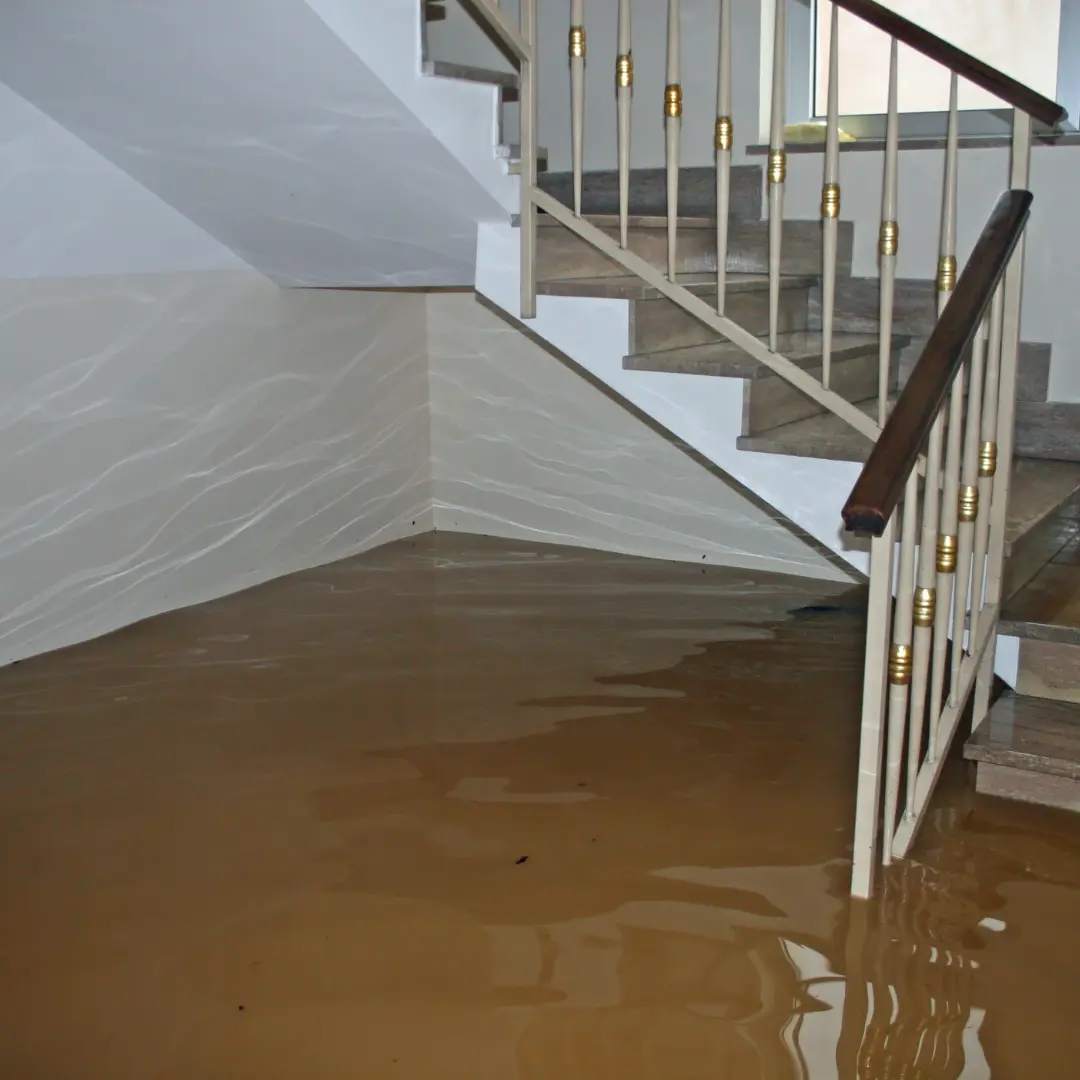
May is when sump pumps earn their keep. The GTA gets 75 to 100mm of rain this month on average, the water table is at its highest, and the ground is still saturated from snowmelt. Your pump runs more hours in April and May than it does the rest of the year combined.
It's also when we get the most calls about basement floods caused not by the rain, but by a sump pump that gave out right when it was needed most. The pump was running fine all winter under zero load, then it couldn't keep up the one week it actually mattered.
Here's how to tell if yours is on the way out.
Your pump is older than 10 years
Most residential submersible sump pumps have a useful life of 7 to 10 years. Some Zoeller and Wayne models push past that, but they're the exception. If yours was installed when you bought the house and you've been there over a decade, that's the first flag.
Check the installation sticker on the pump body or dig out your paperwork. No record? Assume it's older than you think.
A basic replacement pedestal pump runs $150 to $250. A quality submersible (what most homes should have) is $250 to $500 for the unit. Professional installation adds $200 to $400 depending on the pit depth and discharge line setup. That's roughly $450 to $900 all-in, which is a lot less than the $8,000 to $25,000 you'll spend after a full basement flood.
It's running constantly or not running when it should
The pump should cycle on, clear the water, and shut off. If it's running non-stop without shutting down, the float switch may be stuck in the "on" position, or the pump isn't strong enough to keep up with inflow. Either way, something is wrong.
More concerning: a pump that should be running but isn't. If you're getting heavy rain and you haven't heard the pump kick on in a while, go check the pit. Water sitting near the top without the pump cycling means a tripped breaker, a failed float switch, or a dead motor.
Older homes in North York, Scarborough, and Etobicoke often have original sump systems that were sized for typical drainage, not the rainfall events we've been seeing regularly since 2013. A pump rated for 1,800 gallons per hour that's 12 years old probably isn't moving water at anything close to that rate anymore.
The pump is vibrating hard or making grinding noises
A healthy submersible hums quietly. If yours is rattling, grinding, or vibrating enough to move things on the shelf above it, the impeller is probably damaged. Debris that gets past the screen, small stones, silt, the occasional chunk of concrete from an aging pit wall, can crack or clog the impeller. Once that happens, the pump pulls power but moves almost no water.
That's the worst-case scenario: a pump that's "on" and drawing power, while water is rising around it.
The discharge line isn't clear
This one catches people off guard. The pump itself may be fine, but if the discharge pipe is blocked or disconnected, the pump just recirculates water back into the pit. In May, ice blockages are less common than in March but not impossible during those cold overnight stretches we still get early in the month. A disconnected line inside the pit is a more common problem, especially in homes where someone went in for a repair and bumped the fitting.
Walk outside and find where the discharge pipe exits the foundation. In most GTA homes it comes out low on the side wall and terminates 1.5 to 2 metres from the foundation, ideally where the yard slopes away from the house. If there's no water coming out of that pipe during heavy rain, start troubleshooting the discharge before assuming the pump has died.
You have no battery backup
This is less a failure sign and more a missing piece. Toronto's power grid takes a hit every time a serious storm rolls through. A big May thunderstorm that drops 30mm in two hours is exactly the scenario where you lose power and your sump pit fills up fast.
A battery backup sump pump sits alongside your primary pump and takes over on DC power if the main pump fails or the power cuts out. Units from Zoeller or Basement Watchdog run $200 to $400. The backup won't match your primary pump's flow rate, but it will give you 4 to 8 hours of protection, which is usually enough to get through a storm.
A lot of GTA homeowners got caught in the July 2013 storm without a backup. We still hear from people who haven't added one since and have been flooded again since then. If you don't have one, it's worth adding before June.
What to do right now
Go to your basement and run through this quick check:
- Look in the sump pit. Is the pump sitting in clear water, or has debris built up around it? Clean it out if needed.
- Pour a bucket of water slowly into the pit. Does the pump cycle on and off cleanly? Does it clear the water in under 30 seconds?
- Go outside and confirm the discharge line is clear and pointing away from the foundation.
- Find the installation date on the unit if you can.
- If the pump is plugged into a GFCI outlet, test and reset that outlet. These trip silently and the pump won't run until it's reset.
That five-minute check will tell you more than waiting for an alarm to go off.
A note on older GTA homes
In a lot of the postwar semis and bungalows we work in, from Leaside to Long Branch and Agincourt to Mimico, the sump pit was added later as an afterthought. The pit is small, the pump is undersized, and the discharge line is too narrow for the volume the property sees in a heavy rain. If your basement has flooded more than once and the pump seems to be working, the whole system might just be undersized for your lot. That's a bigger conversation, but worth having before the next bad storm.
If it's already too late
If your pump has failed and water has gotten in, the process is the same as any basement flood. Document everything on video before touching anything. Then call your insurer. Sump pump failure coverage varies a lot in Ontario. Some policies cover it under a sewer backup endorsement, others exclude it entirely. Knowing what you have before a flood happens is worth a 10-minute call to your broker right now, today.
If water has been sitting for more than a few hours, or if it got under hardwood, into drywall, or into insulation, you need professional drying equipment. Residential dehumidifiers don't have the capacity to pull moisture out of wall cavities. We've seen mould growing within 36 hours in a finished basement that looked mostly dry on the surface.
If your sump pump has failed or your basement has water in it, call us at 647-563-9966. We handle the water extraction and structural drying, and we help you work through the insurance process. We pick up any hour, any day.
The Preferred Group
IICRC Certified restoration team. Toronto-based, working across the GTA since 2006. 6,000+ projects under our belt.